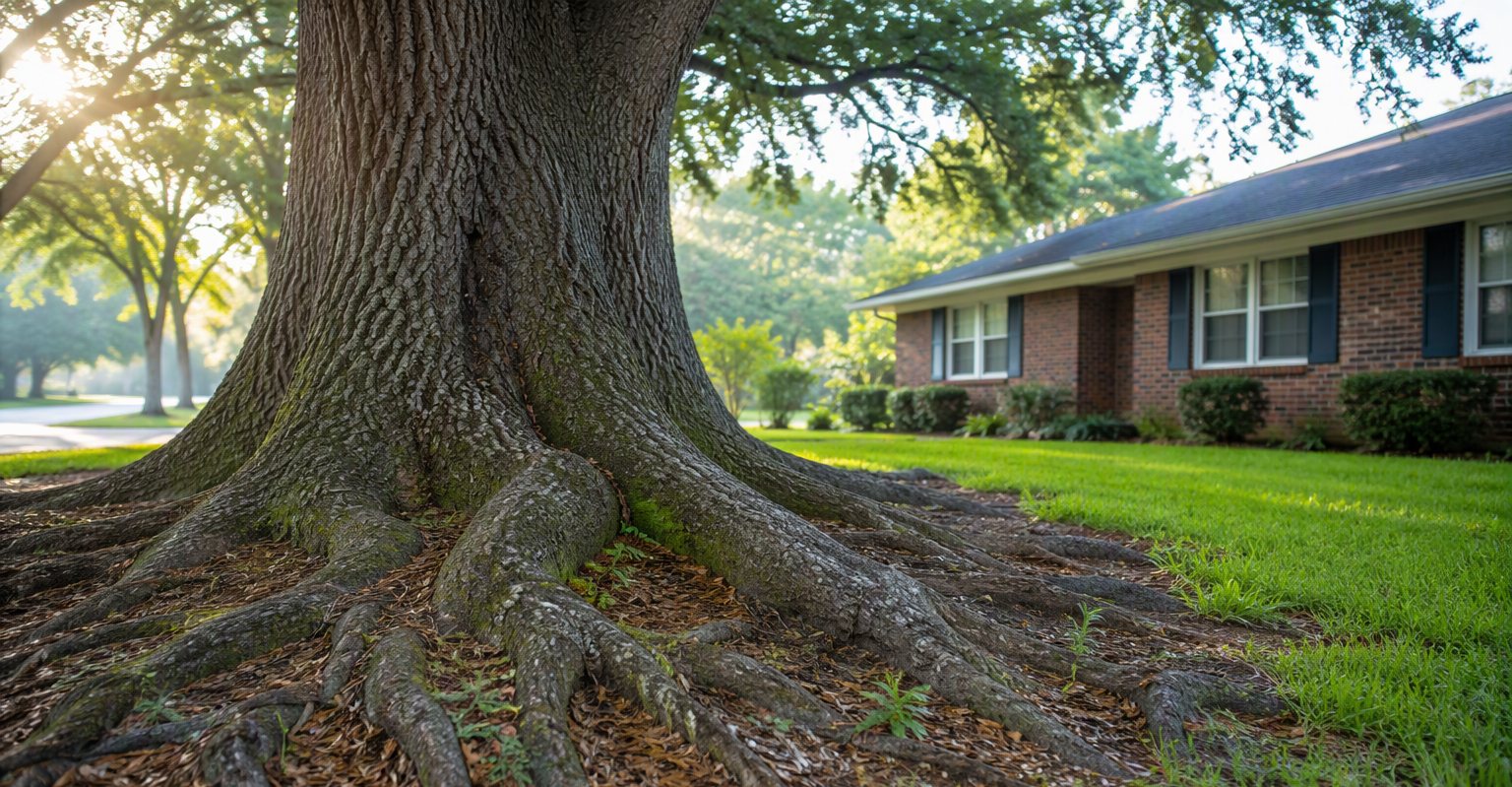
Roots don’t break pipes. They find the ones already broken.
The mechanics are simple: a clay or cast-iron lateral ages, its joints loosen a fraction, and moisture wicks out into the surrounding soil. Roots find that moisture the way roots do — slowly, certainly — and slip into the joint gap finer than a pencil lead. Inside the pipe they hit the buffet: water, nutrients, warmth. Within a few seasons the hair-thin intruder is a root mass that catches everything the household sends down. The pipe didn’t fail all at once. It failed for years, underground, politely, until the morning the floor drain became a fountain.
The warning signs Greenville owners miss
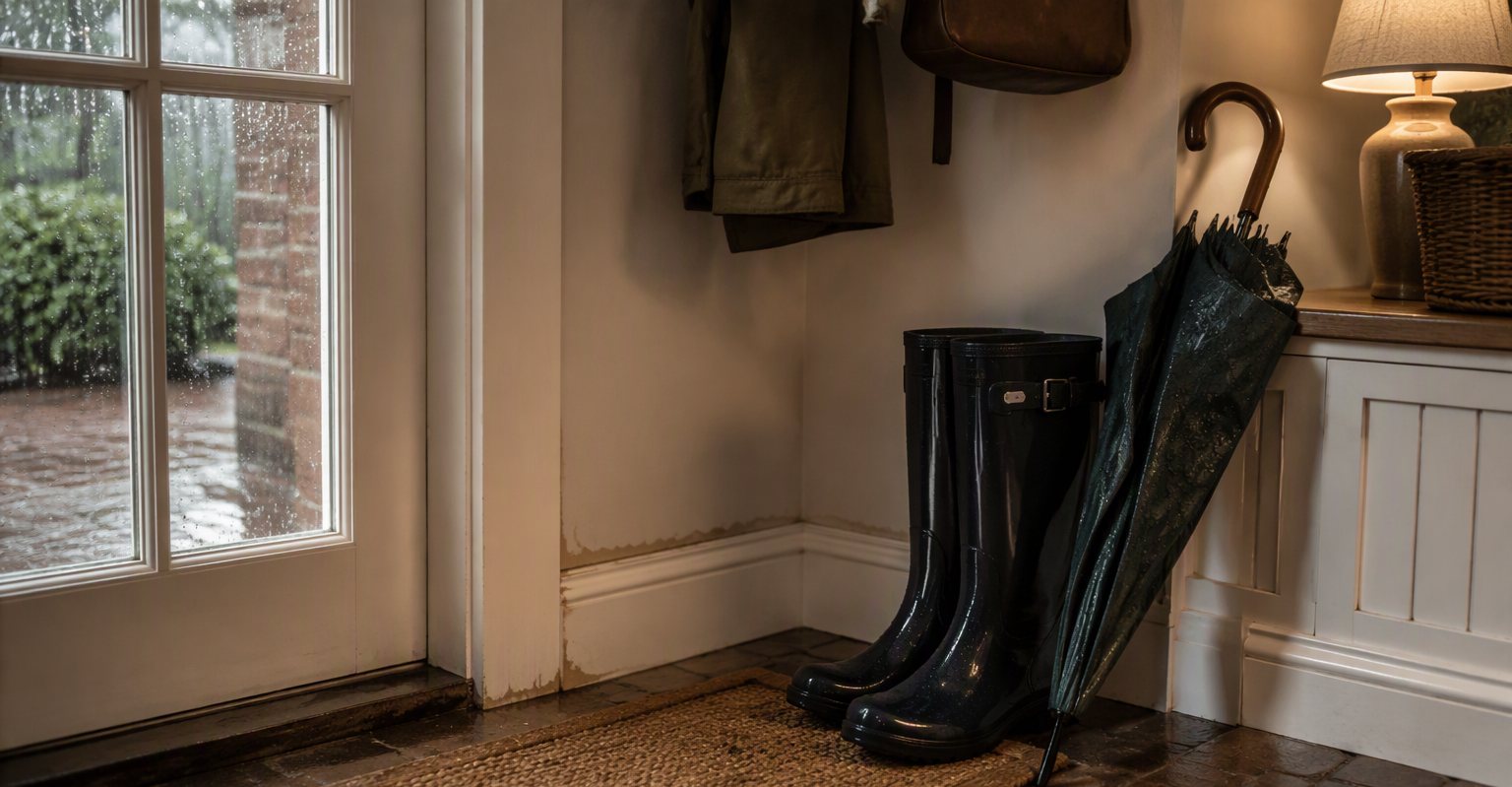
A line being strangled by roots talks for months before it screams: drains that gurgle after the washing machine dumps, a toilet that needs the occasional second flush for no reason, a sewage smell in the yard near the lateral’s path, one low spot in the lawn that stays greener and soggier than the rest. After heavy rain — when storm water infiltrates the same cracked joints the roots used — the symptoms sharpen. In the older Greenville blocks where the trees are eighty and the laterals are seventy, these signs aren’t quirks. They’re the countdown.
When the backup reaches the house
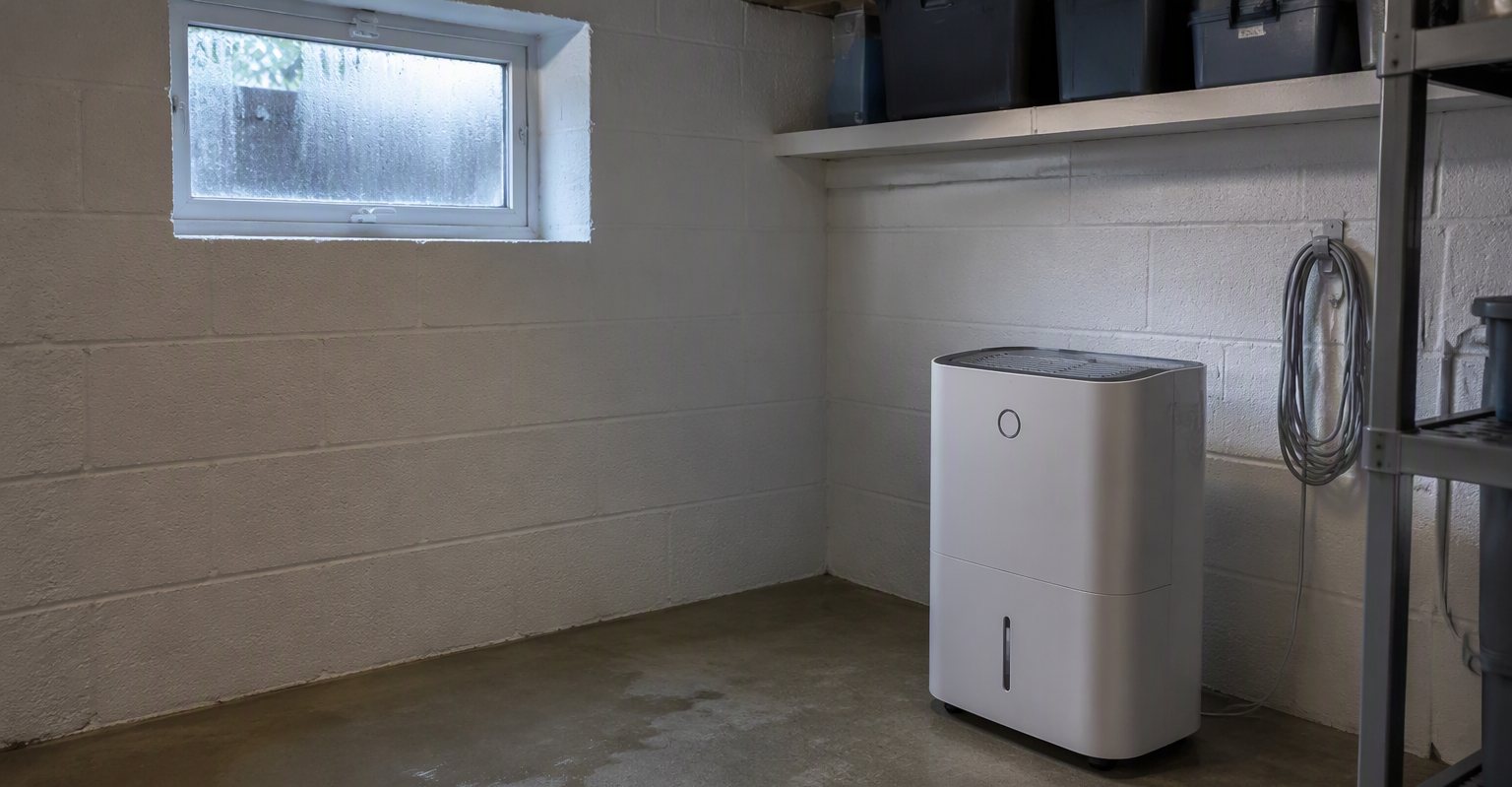
The day the line finally closes, the lowest drain in the house — basement floor drain, downstairs shower, a tub on the slab — becomes the overflow. What comes up is Category 3 water: contaminated, biohazardous, and unforgiving about what it touches. Porous material below the water line comes out; surfaces get disinfected in passes; the dry-out runs to measured readings. It’s one of the most involved jobs in the trade, and it starts, more often than not, with a tree everyone loves.
The fix that ends the cycle
Cleaning roots out of a line buys time — the roots grow back to the water source, typically within a couple of years. The real fixes are a liner or a replacement, and the honest plumber tells you which your line needs after a camera run. If you’ve had one backup, or your drains are singing the song described above, the camera inspection is cheap certainty. The backup you prevent is the dry-out you never need.