Why the Reedy floods the way it does
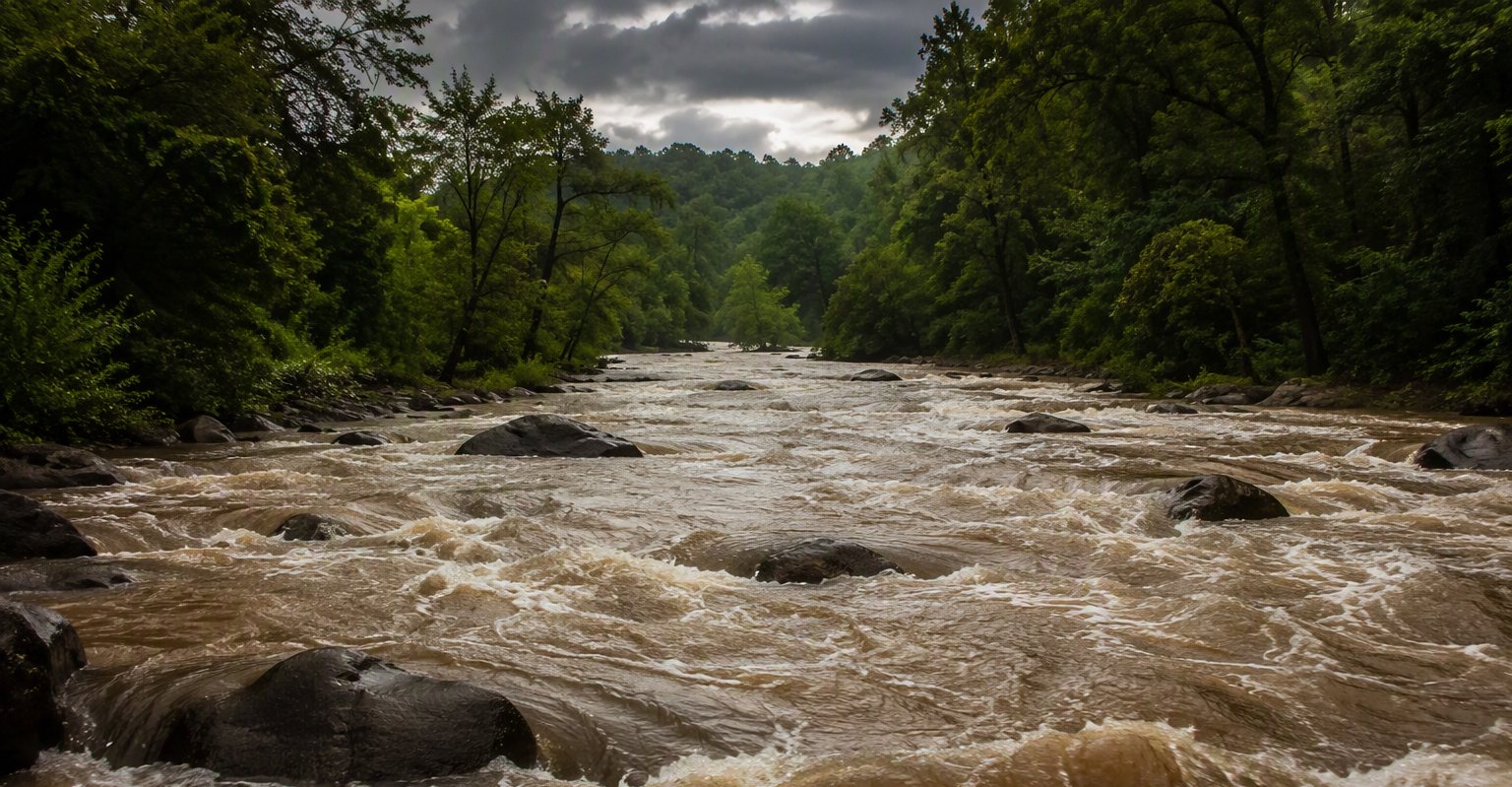
Greenville sits on red clay over granite — ground that absorbs almost nothing once it’s saturated. A slow, gentle rain soaks in fine. The floods come from the other kind: the stalled tropical system or the training thunderstorm line that drops inches in hours. The clay says no, the runoff sheets downhill, and the Reedy and its feeders — Richland Creek, Brushy Creek, Gilder Creek, the dozen nameless draws — rise fast. Flash is the right word: this is not a river that creeps up politely over days.
The map in your head is out of date
Every Greenville old-timer knows the historic flood spots. What changes the math is growth: every new subdivision, rooftop, and parking lot upstream pushes more runoff into the same creeks faster. Areas that hadn’t flooded in thirty years have taken water in the last decade, and the county’s flood maps are chasing the development. If you’re anywhere near a creek draw — even a dry-looking one — you’re closer to flood water than the yard suggests in July.
The first hour, if the water comes
Safety before salvage: if water is entering, kill power to the affected level at the panel — water and outlets don’t negotiate. Move people up, not out; flood roads kill more people than flood water in living rooms. Photograph everything once it’s safe: the water line, the rooms, the yard. Then call for extraction — river water is Category 2 at best, often Category 3, because it brings the creek with it: silt, bacteria, lawn chemicals, sewage overflow. It’s not rainwater, and it doesn’t get treated like rainwater.
The dry-out is different after a flood
Flood jobs carry a contamination layer that a burst pipe doesn’t: affected porous material below the water line — carpet, pad, drywall, insulation — typically comes out, and what stays gets disinfected before it gets dried. Then the drying is measured, because crawl spaces and basements in the flood path hold moisture for weeks on their own. The houses that mold after a flood are the ones that got mopped and aired, not the ones that got extracted and verified.