Why mild-climate houses freeze harder
Minnesota houses are built for January. Greenville houses are built for July — pipes in vented crawl spaces, hose bibs on uninsulated walls, supply runs through garage ceilings and attics, all sized for a climate that forgives them fifty-one weeks a year. Then the arctic front arrives: a night in the teens with wind, or an ice storm that kills power — and with it, the heat that was doing all the protection. The split usually happens silently during the freeze. The announcement comes at thaw, under full pressure.
The fall routine, in order of importance
First: disconnect every hose. A hose left on the bib traps water in the faucet body, and that’s the freeze that splits the pipe inside the wall — the classic Greenville burst. Second: know your main shutoff and turn it once to prove it moves. Third: insulate the exposed runs — crawl-space pipes near vents, garage-ceiling lines, the attic run over the bonus room. Foam sleeves are cheap and take an afternoon. Fourth: on the hard-freeze nights, open the cabinet doors under sinks on exterior walls and let the vulnerable faucets drip — moving water and room air are genuine insulation.
The ice-storm wrinkle
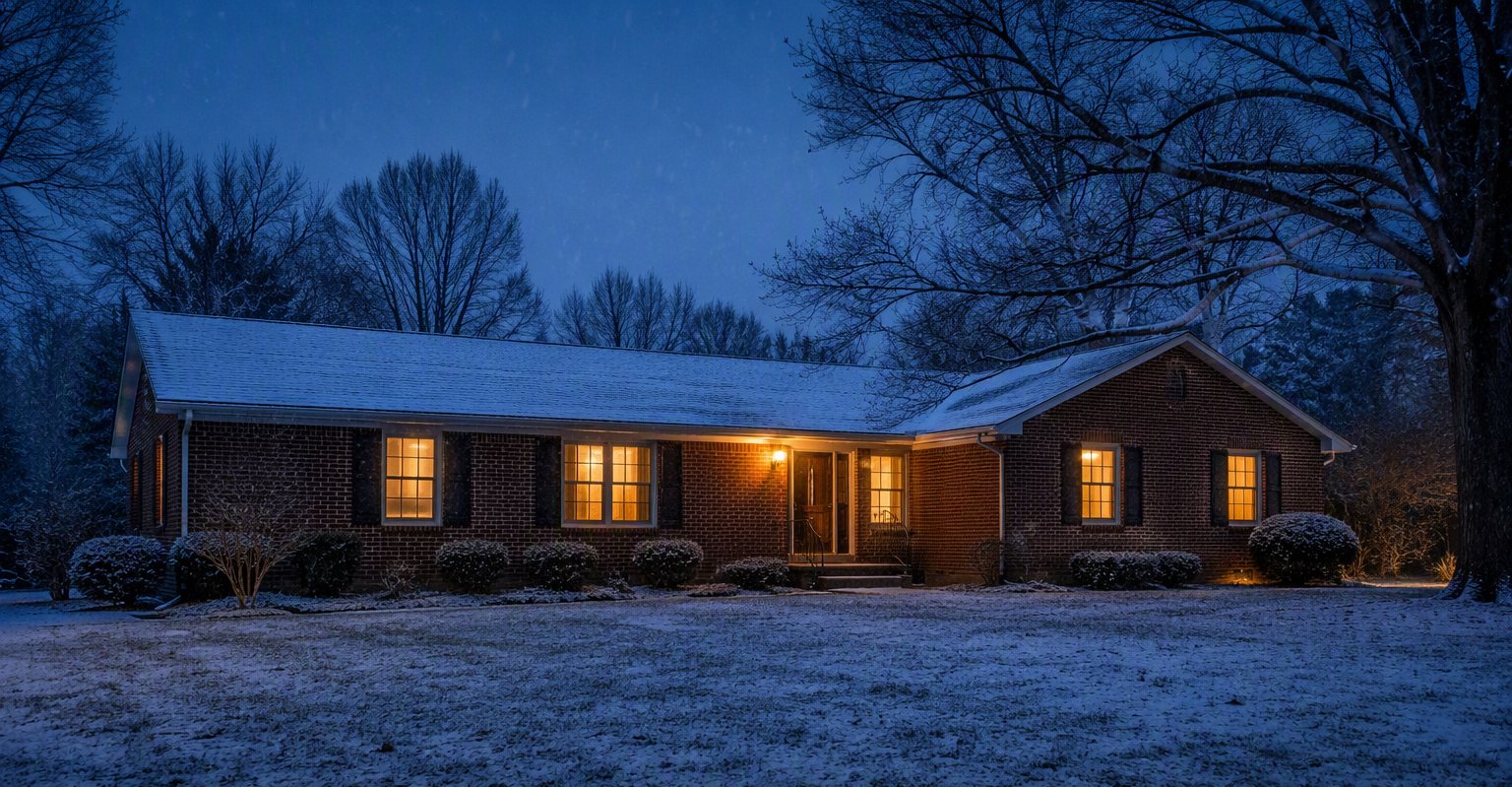
The Upstate’s signature winter event isn’t snow — it’s ice, and ice takes the power with it. A house without heat in a hard freeze is a countdown, and the crawl space goes first. If the outage stretches past a few hours and temperatures are diving, the conservative play is shutting off the main and opening the faucets to drain the pressure. It’s ten minutes of inconvenience that removes the burst from the list of things the storm can take.
If the pipe already burst
Shut the main, kill power to any wet area, and start making calls — plumber for the line, restoration for the water. A burst supply line moves gallons per minute into walls, insulation, and the rooms below, and the dry-out clock started when the ice let go, not when you found the puddle. The houses that come out of a burst cheap are the ones where extraction started the same day.